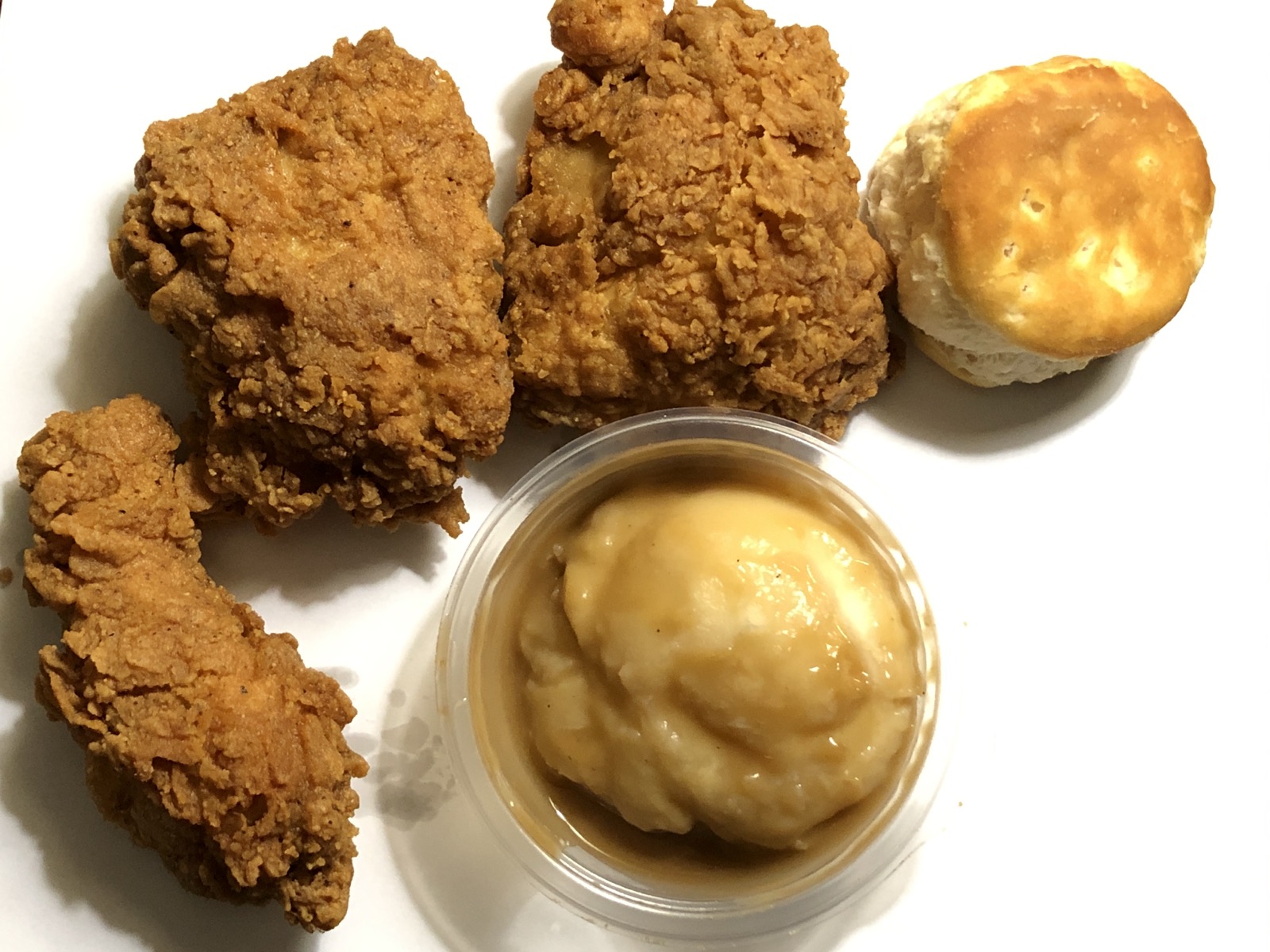
Takeout and delivery make family-style fried chicken convenient, but they also introduce the variables most likely to reduce quality. A hot item releases moisture into its package. That moisture cannot disappear, so it settles on the crust. Meanwhile, mashed potatoes, gravy, biscuits and cold drinks each respond differently to the same journey. A good off-premise order is therefore a small logistics plan.
Takeout gives the customer more control
With pickup, you choose the route, departure time and way the food is carried. You can check the order before leaving and keep cold drinks away from hot containers. Ordering ahead may reduce time at the counter, although a quoted ready time is an estimate rather than a guarantee.
Arrive close to the promised time. Arriving too early transfers waiting from the app to the lobby; arriving late allows food to sit. At handoff, compare the bag to the receipt without opening sealed food containers unnecessarily. Count sides, biscuits, sauces and drinks. If the restaurant uses a pickup shelf, verify the name carefully rather than taking a similar bag.
Delivery divides the chain of responsibility
The restaurant prepares and packs the food, while a delivery platform may process the order and a courier handles the final journey. Delays can occur at any point. A fair review identifies whether the problem was an incorrect item, packaging failure, long courier route or unclear platform communication. Customers should use the support channel that processed payment; a third-party marketplace may need to handle credits for orders placed in its app.
Delivery menus and prices may differ from counter menus. Service fees, delivery fees, taxes and an appropriate tip can materially change the total. Compare the final checkout amount, not the menu subtotal. A promotion is valuable only if it survives the full fee stack.
What tends to travel best
| Order type | Travel outlook | Practical note |
|---|---|---|
| Bone-in chicken | Moderate | Retains heat, but crust softens as steam accumulates. |
| Chicken sandwich | Moderate | Compact and easy to portion; sauce and trapped steam can soften breading. |
| Fries | Time-sensitive | Texture declines quickly; choose the shortest route. |
| Mashed potatoes and gravy | Generally resilient | Covered container retains heat, but verify lids are secure. |
| Biscuits | Resilient for short trips | Best warm and protected from condensation. |
| Cold drinks | Separate handling | Keep upright and apart from hot bags where possible. |
Improve the meal after arrival
Unpack promptly on a heat-safe surface. Do not leave fried food sealed in a delivery bag while setting the table. If reheating is necessary, follow food-safety guidance and use an appliance appropriate for the item; paper, foil and plastic packaging are not automatically microwave-safe. Refrigerate leftovers promptly rather than leaving a family meal at room temperature through the evening.
For a group, label special orders before distribution and count portions once, not repeatedly. Put sauces and serving utensils in one place. The simple act of unpacking in an organized sequence protects heat and prevents people from opening every container to find a side.
Bottom line
Takeout is the stronger off-premise option when you can collect the food because it preserves control and makes immediate correction possible. Delivery earns its premium when time, mobility or group convenience matters more than peak texture. Neither format is inherently bad; both require expectations that account for distance. The farther the meal travels, the less fair it is to judge it as if it crossed only a dining room.