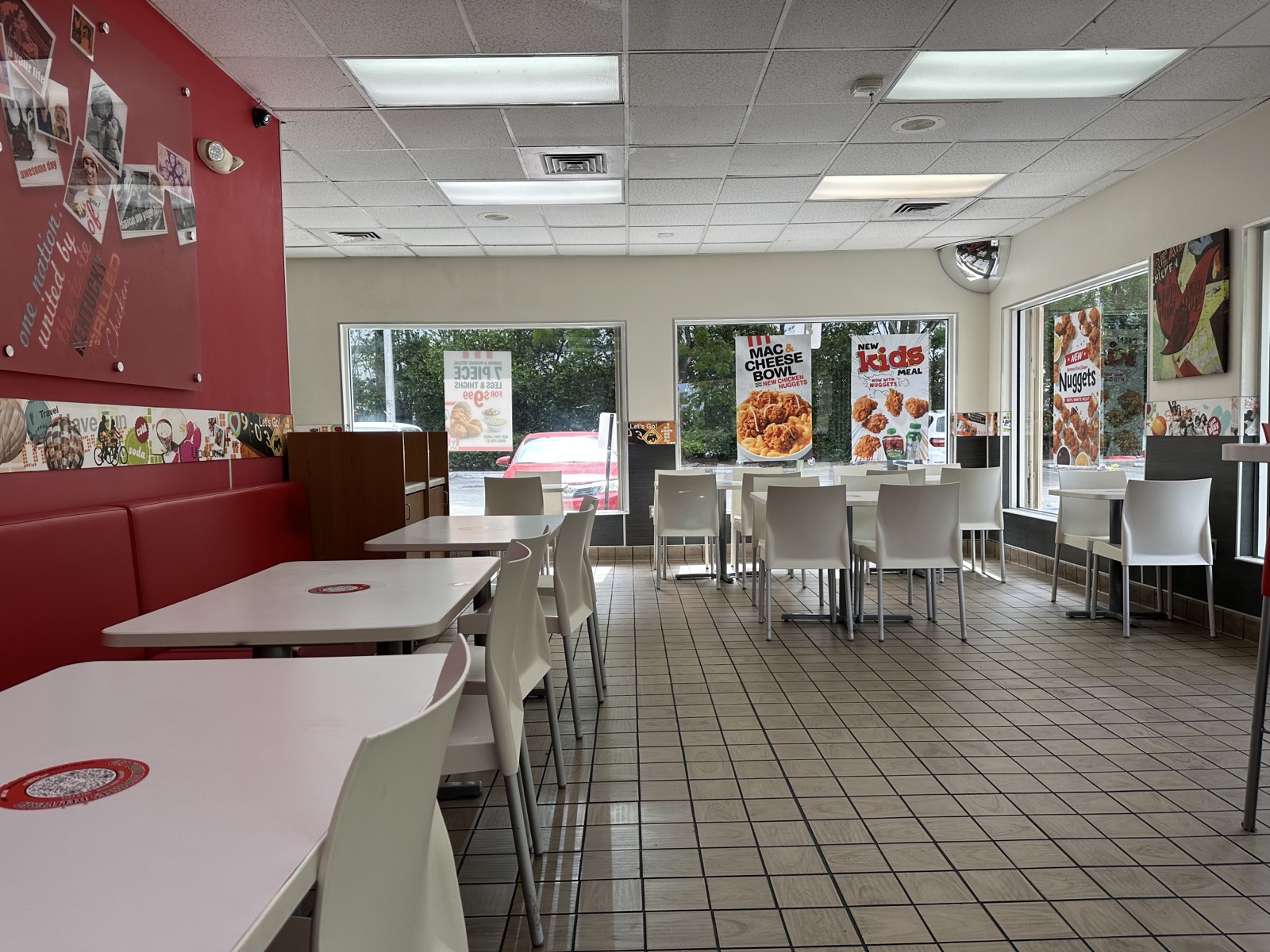
Dine-in remains the most revealing KFC format even though many customers now default to a car or app. The customer can see the queue, confirm the order immediately and eat before steam accumulates in a closed container. The format also makes basic hospitality visible: the condition of tables, floors, trash stations and restrooms becomes part of the product.
What the format does well
Freshly served fried chicken is sensitive to time. A short counter-to-table handoff protects heat and gives the crust its best chance of staying crisp. Biscuits and fries also benefit from immediate eating. If an item is missing or a side is incorrect, the counter is close enough for a quick correction rather than a support ticket.
Dine-in is especially useful for first-time menu comparisons. A guest can sample bone-in chicken, a side and a biscuit without wondering whether twenty minutes in a car changed the result. Families can divide a bucket at a table rather than balancing packaging at home, and unused food can be packed after everyone knows what remains.
Where the experience can break
A dining room may be technically open but treated as a secondary channel during a drive-thru rush. Tables can turn slowly, condiment areas may empty and the person taking counter orders may also be handling other tasks. Older buildings can feel tired even when food preparation is sound. Those conditions deserve mention, but they should be described precisely rather than blended into one emotional score.
Queue length alone is not proof of poor service. A large family order, a batch being prepared or a complicated substitution can pause the line. More useful observations are whether the wait is explained, whether orders move in sequence and whether staff acknowledge customers at the counter.
A six-part dine-in review
| Area | What to observe | Why it matters |
|---|---|---|
| Arrival | Clear entrance, current hours and understandable line | Reduces uncertainty before ordering |
| Order | Items repeated accurately and substitutions confirmed | Prevents disputes at handoff |
| Food | Heat, crust condition, side temperature and portion fit | Tests preparation without travel |
| Room | Clean table, usable seating and maintained waste area | Defines whether staying is comfortable |
| Accuracy | Every piece, side, sauce and drink present | Shows handoff control |
| Recovery | Reasonable response to a specific, polite request | Shows how the restaurant handles mistakes |
How to get a better visit
Check the official location page for dine-in hours, which may differ from drive-thru hours. Avoid assuming every restaurant has the same seating or amenities. If texture matters most, open the meal promptly and avoid leaving food sealed while finding a table. For a group, assign one person to compare the receipt with the tray while another chooses seats.
When writing a public review, include the city or exact restaurant listing, order channel and approximate time. Explain whether the issue was food, room condition or order accuracy. Do not photograph employees without consent or publish receipt details. A clear account helps other customers and gives the operator something specific to address.
Bottom line
Dine-in earns our preference as the best diagnostic format, not because every dining room is excellent, but because fewer variables sit between the kitchen and the customer. It gives KFC’s core food the strongest conditions and gives mistakes the fastest path to correction. Guests who care most about crust, heat and immediate accuracy should choose a clean, open dining room whenever one is convenient.